.png)
.png)
Why Drones Are the Smarter Safer Faster Choice for Building Facade Cleaning

Cleaning a building facade should not feel like planning a mountaineering expedition. Yet for many taller properties, that is exactly what traditional exterior cleaning can become. Ropes, anchors, harnesses, lift equipment, traffic control, long setup times, and a specialized rappel team all add cost and risk before the first stain is even removed.
Drone pressure washing and soft washing change that equation.
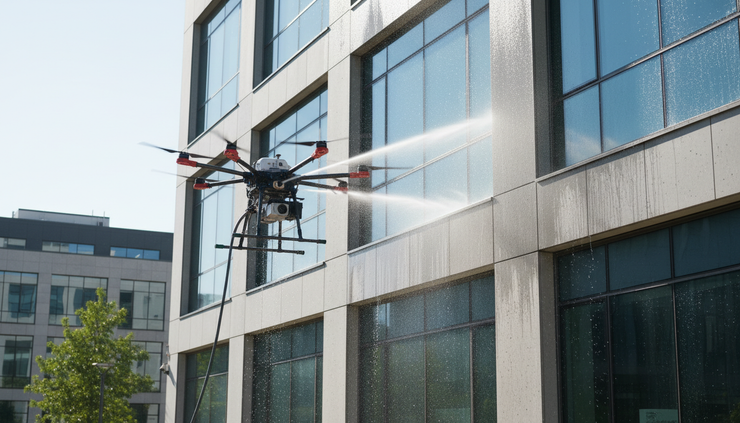
A cleaning drone can reach high walls, parapets, ledges, signage areas, and hard-to-access facade sections from the ground. Instead of sending people over the edge of a roof, operators control the drone at a safe distance while the system delivers water, cleaning solution, or a soft wash mix to the surface. For many commercial buildings, condos, hotels, warehouses, schools, hospitals, and multi-story structures, that means the work can be done faster, safer, and with fewer site disruptions.
This does not mean drones replace every access method in every situation. Some detailed hand work still needs human technicians. But for large exterior surfaces, algae staining, grime, pollen, soot, salt residue, and general facade buildup, drones are becoming the smarter choice.
Drone facade cleaning reduces the biggest safety risk
The strongest argument for drone cleaning is simple: fewer people need to work at height.
Rappel teams are skilled and highly trained, but rope access brings real exposure. Technicians work suspended from the building, often near windows, ledges, sharp edges, rooftop equipment, and changing wind conditions. Every job requires careful planning, reliable anchor points, rescue procedures, exclusion zones, and constant communication.
Drone cleaning keeps the operator on the ground or on a safe nearby surface. The drone does the high-reach work while the crew manages controls, hoses, water flow, cleaning solution, and jobsite safety from below.
That shift matters.
When a person is on ropes, the cleaning plan has to protect the worker first. When a drone is used, the plan can reduce the need for that hazard in the first place. There are still safety requirements, including trained pilots, controlled work areas, weather checks, and proper equipment maintenance. But the most dangerous part of the job, having a person suspended on the side of a building, can often be avoided.
Drone cleaning also reduces risks tied to lifts and scaffolding. Aerial lifts need stable ground, access lanes, delivery, setup, and qualified operators. Scaffolding takes time to build, inspect, use, and remove. Both can interfere with entrances, parking lots, sidewalks, landscaping, and traffic flow.
For occupied buildings, that matters. Tenants, guests, patients, students, or customers may still need access during the job. A drone cleaning crew can often work with a smaller ground footprint, which helps reduce disruption.
Drones make pressure washing and soft washing more efficient
Facade cleaning is not just about reaching the surface. It is about reaching it in the right way.
Pressure washing uses pressurized water to remove dirt, buildup, and loose contaminants. Soft washing uses lower pressure with cleaning solutions designed to break down organic growth, light staining, algae, mildew, and grime. Many building exteriors need a careful mix of both approaches.
Drone systems can support these methods while covering broad vertical areas efficiently. Instead of moving ropes across a roof section by section, or repositioning a lift throughout the day, a drone can move across the facade from the air. That can cut down on dead time between cleaning passes.
A drone can be especially useful for:
Large blank walls on warehouses and industrial buildings
Hotel and condo facades with repeated vertical sections
Parking garage exteriors
School and municipal buildings
High signage areas
Upper stories above landscaping, steps, or tight access points
Buildings where lift placement is difficult
The efficiency comes from reduced setup and fewer access changes. A rappel team may need to rig from multiple roof points. A lift may need to be moved again and again. Scaffolding may take longer to install than the cleaning itself.
With drone cleaning, once the site is prepared and the system is connected, the drone can begin treating the facade without a major access buildout.
Safer access can also mean faster project timelines
Time is one of the hidden costs in facade cleaning.
Traditional rope access can be slow before cleaning starts. The team must assess roof anchor points, set ropes, inspect gear, protect edges, plan fall protection, and mark off areas below. If the building has several elevations, the crew may need to repeat parts of that setup throughout the project.
Weather can slow things down too. Rope teams can face more limits when wind, rain, cold, or roof conditions create unsafe access. Drones also have weather limits, especially with wind and visibility, but they can often reduce the amount of time workers spend exposed to roof edges or vertical drops.
The speed advantage becomes clearer on large, repetitive surfaces. A drone does not get tired in the way a suspended technician does. The operator can maintain consistent spray distance, adjust position quickly, and cover upper sections without climbing, descending, or resetting ropes.
That does not mean every drone job is instant. Good cleaning still takes planning. The crew needs to protect nearby people and property, choose the right cleaning method, confirm water access, manage runoff where required, and test surfaces when needed. But compared with a full rope access setup, drone cleaning can often move from arrival to active cleaning much faster.
For property owners and facility managers, faster work can mean:
Fewer days with restricted entrances or sidewalks
Less interruption for tenants and visitors
Lower labor hours on site
Quicker turnaround before inspections, openings, events, or seasonal maintenance deadlines
Those benefits add up, especially when cleaning multiple buildings or large facade areas.
The cost savings go beyond the cleaning invoice
The cheapest quote is not always the lowest total cost. Facade cleaning affects labor, equipment, insurance exposure, tenant experience, traffic flow, and building operations.
Hiring a rappel team often means paying for highly specialized access work along with the cleaning itself. That skill has value, but it can be expensive when the main task is washing broad exterior surfaces. Rope access may also require more personnel on site, including technicians on ropes, ground spotters, and safety support.
Lift-based cleaning can bring costs of its own. Equipment rental, delivery, fuel, operator requirements, ground protection, and parking restrictions can all increase the bill. In dense areas, simply placing a lift near the building may require coordination with property management, local authorities, or neighboring businesses.
Drone cleaning can reduce several of those cost drivers.
Traditional rappel or lift access | Drone pressure washing and soft washing |
More time spent setting up access systems | Faster setup for many facade types |
Workers exposed to height for long periods | Operators remain on the ground in most cases |
Larger ground footprint for lifts or scaffolding | Smaller work zone for many projects |
Repeated rope resets or lift moves | Drone can reposition quickly across elevations |
Higher disruption for entrances, parking, and sidewalks | Less disruption when the site allows drone use |
The savings are not only about labor hours. They can also come from finishing sooner, keeping more areas open, avoiding lift rentals, and reducing the need for complex access planning.
For multi-location property owners, the savings can be even clearer. A repeatable drone cleaning process can help maintain a consistent standard across buildings without rebuilding a custom access plan from scratch each time.
Drone cleaning improves reach without being rough on the building
A common concern is whether drone cleaning is too powerful or too imprecise. The answer depends on the system, operator, cleaning method, and surface.
Good facade cleaning is not about blasting everything with maximum pressure. In fact, many building materials need a lighter touch. Sealants, painted surfaces, EIFS, stucco, older masonry, window gaskets, and decorative facade components can be damaged by the wrong pressure or angle.
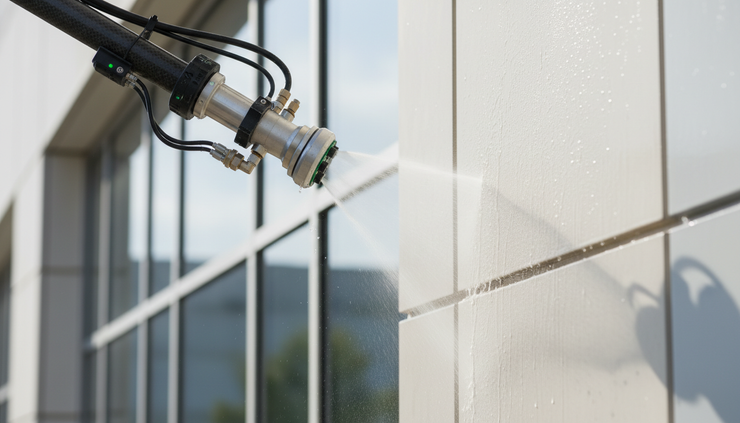
This is where soft washing is useful. A soft wash approach relies more on the cleaning solution and dwell time, not brute force. The drone applies the solution to the surface, the solution breaks down organic growth and grime, and the crew rinses at a pressure suited to the material.
For tougher surfaces, controlled pressure washing can remove loose dirt and buildup efficiently. The key is using the right nozzle, distance, flow rate, and technique.
A qualified drone cleaning crew should be able to explain:
Which surfaces will be pressure washed
Which surfaces will be soft washed
What cleaning solution will be used
How windows, landscaping, electrical fixtures, and vents will be protected
How runoff will be handled
What weather conditions are acceptable
What areas may still require hand detailing
Drones also help reach facade areas that are awkward for people. Recessed sections, high corners, wall returns, upper signs, and areas above canopies can be difficult for lifts or ropes. A drone can approach these sections from angles that make the cleaning more direct, while the operator maintains a clear view of the spray pattern.

Rappel teams still have a place, but not every job needs them
Rope access is not obsolete. There are situations where a rappel team may still be the right choice.
Some facade work requires hands-on inspection, caulking, repair, scraping, painting, window seal work, or detailed cleaning around delicate architectural elements. If a technician needs to physically touch the surface, make repairs, or inspect a hard-to-see defect up close, drone washing may only be part of the solution.
Buildings with unusual shapes, tight airspace, heavy pedestrian traffic, certain security restrictions, or flight limitations may also require another access method. Drone operators must follow applicable aviation rules, local laws, property requirements, and safety procedures. In the United States, commercial drone work generally requires a properly certified remote pilot and safe operating practices.
The smarter approach is not to force one method into every job. It is to match the access method to the task.
For many facade cleaning projects, that means using drones for the broad washing work and saving rope access for the few areas that truly require hands-on service. This hybrid approach can reduce total time at height while still delivering a thorough result.
What a well-run drone cleaning project looks like
A professional drone cleaning job starts before the drone takes off.
The crew should inspect the property, identify sensitive surfaces, confirm water access, check for overhead wires or obstacles, and review where people and vehicles may pass. They should look at wind exposure, rooflines, neighboring properties, and any areas that need special protection.
A good plan covers both cleaning and safety.
That includes setting a controlled ground area, communicating with building staff, protecting doors and outdoor furniture, and choosing the right time of day to reduce disruption. On some properties, early morning or low-traffic windows make the work easier. On others, the crew may clean one elevation at a time to keep entrances open.
The cleaning method should be matched to the facade. Soft washing may be best for algae and organic staining. Pressure washing may suit concrete, masonry, or other durable surfaces. Some areas may need a rinse only. Others may need pretreatment.
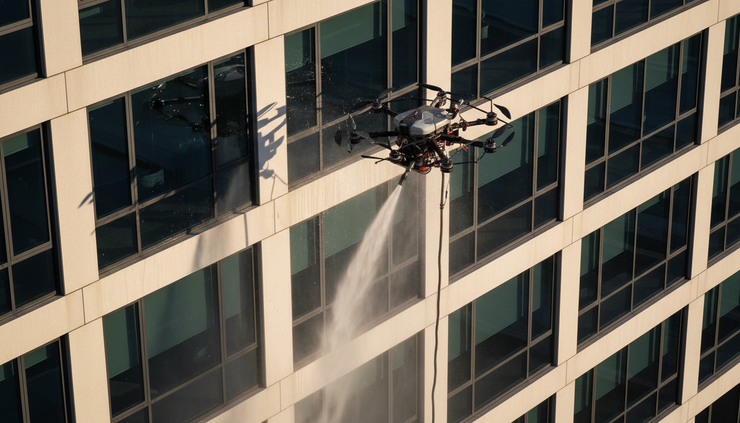
The best results come from control, not force. A drone lets the crew apply that control from a safer position.
The smarter choice is the method that lowers risk and gets the job done
Building facade cleaning will always require planning, skill, and respect for safety. The difference is that drones can remove some of the hardest parts of the job.
They can reduce the need for workers to rappel down buildings. They can cut setup time. They can reach high and awkward areas without scaffolding or lift placement. They can apply pressure washing and soft washing methods across large surfaces with less disruption. They can help lower total project cost by reducing labor, equipment, and downtime.
That is why drones are quickly becoming the smarter choice for many exterior cleaning projects.
Rappel teams still matter for specialized hands-on work. Lifts still make sense in some settings. But when the goal is to clean building facades efficiently, safely, quickly, and cost effectively, drone cleaning deserves a serious look before ropes go over the roof edge.
Comments